
Reading Time: 8 Minutes
| By Arrow | April 9, 2025 |
Introduction
Vietnam’s history is one of resilience, shaped by myth, war, reform, foreign rule, and independence. From the legendary Hùng Kings to the Nguyễn Dynasty’s fall in 1945, the country evolved through conquest and resistance.
This summary offers a broad overview of Vietnam’s key historical periods and figures. While not exhaustive, it gives newcomers or returning readers a quick guide to the country’s long and complex past.
Ancient & Prehistoric Vietnam (500,000 BC – 258 BC)
Prehistory Era (c. 500,000 BC – 2879 BC)
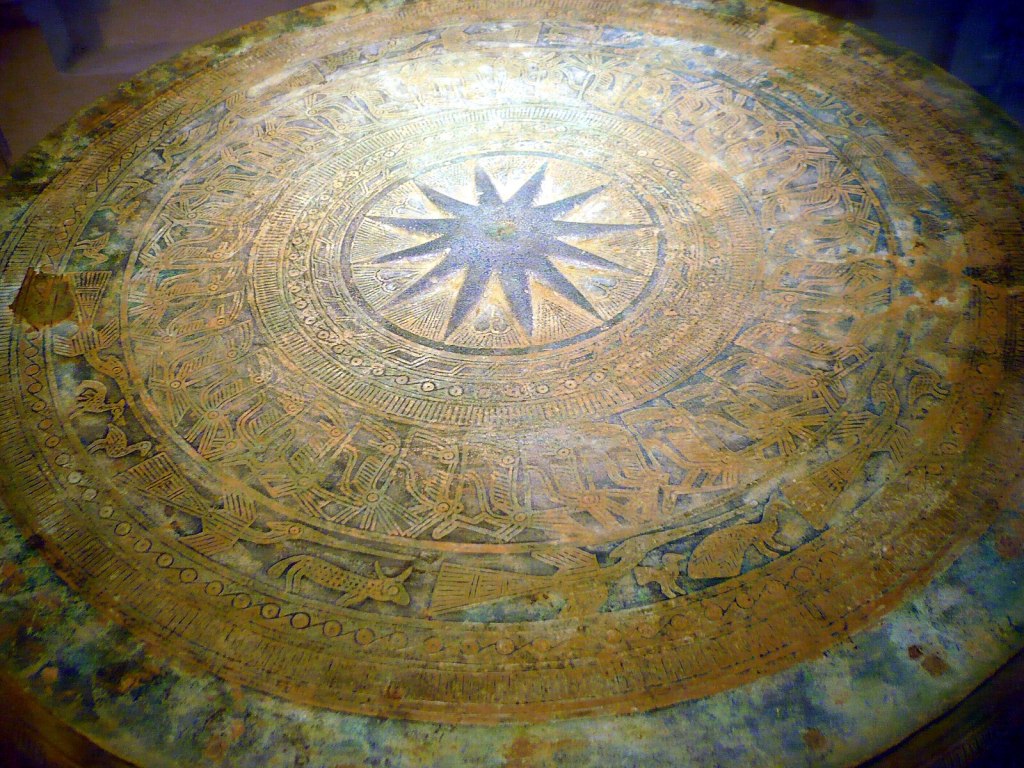
Early human presence is evidenced by Homo erectus fossils and Paleolithic cultures like Sơn Vi and Hòa Bình. The Đông Sơn culture (Bronze Age) stood out for its metallurgy, rice farming, and Đông Sơn drums (Tan, 2023).
By 2000 BC, Neolithic migrations of the Bách Việt brought farming and shaped early societies like Văn Lang (Britannica; Tan, 2023).
Hồng Bàng Dynasty (2879 BC – 258 BC)
Legend says 18 Hùng Kings ruled Văn Lang, an early kingdom along the Red River and into southern China (Britannica).
Early Kingdoms (257 BC to 111 BC)
Thục Dynasty (257 BC – 179 BC)
An Dương Vương (Thục Phán) unites Văn Lang into Âu Lạc and builds the Cổ Loa citadel, but loses to Nam Việt (The History Files).

Nam Việt / Nanyue (179 BC – 111 BC)
Triệu Đà, a former Qin general, founds Nam Việt after conquering Âu Lạc. He blends Chinese and Việt traditions, ruling a large territory from near modern-day Guangzhou (Britannica; The History Files).
China’s Han dynasty annexes Nam Việt in 111 BC, starting the First Chinese Domination (The History Files).
Chinese Rule (111 BC – 939 AD)
First Chinese Domination (111 BC – AD 40)
China begins direct rule and cultural assimilation, but Vietnamese identity endures through symbols like Đông Sơn drums (The History Files).
Trưng Sisters Rebellion (AD 40 – 43)
The Trưng sisters briefly expel Chinese forces, becoming icons of resistance and female leadership before being defeated by Han troops (The History Files).
Second Domination (AD 43 – 544)
China tightens control, sparking uprisings including those by Lady Triệu, who led 30 battles before dying at 21 years old (The History Files; Borton, 2018).
Lý Bí & First Restoration (AD 544 – 602)
Lý Bí declares independence and founds the Early Lý dynasty, renaming the kingdom Vạn Xuân. Internal conflict and a Sui invasion end the restoration (The History Files).
Third Domination (AD 602 – 939)
China regains control, but rising Vietnamese resistance builds through the 9th century (The History Files).
Battle of Bạch Đằng River (AD 939)
Ngô Quyền defeats the Southern Han in 938, ending over 1,000 years of Chinese rule and launching Vietnam’s independent Ngô dynasty (The History Files).
Independent Vietnam: The Rebirth Era (AD 939 – 1009)
Ngô Dynasty (AD 939 – 965)
Ngô Quyền regains independence after defeating China at Bạch Đằng River, but struggles with internal instability (The History Files).
Đinh Dynasty (AD 968 – 980)
Đinh Bộ Lĩnh unifies Vietnam, establishes Đại Cồ Việt, but is assassinated in AD 979, leading to his young son’s succession (The History Files).
Early Lê Dynasty (AD 980 – 1009)
Lê Hoàn resists a Song China invasion and defeats Champa, but the dynasty fades before being replaced by the Later Lý dynasty (The History Files).
Independent Vietnam: The Great Việt Era (1009 – 1527)
Lý Dynasty (1009 – 1225)
Stability, capital moved to Thăng Long (Hanoi), and expansion of Đại Việt. Lý Thường Kiệt’s military victories over China solidified Vietnam’s independence (The History Files).
Trần Dynasty (1225 – 1400)
Repels Mongol invasions, advances culture and architecture. Trần Hưng Đạo becomes a hero after leading major military victories (The History Files).

Hồ Dynasty (1400 – 1407)
Hồ Quý Ly usurps the throne and overthrows last Trần emperor. Reforms fail, and the dynasty falls to the Ming invasion (The History Files).
Fourth Chinese Domination (1407 – 1427)
Brutal and repressive Ming occupation sparks resistance from the Việt populace (The History Files).
Lê Lợi and Nguyễn Trãi’s Rise and Defeat of the Ming (1418 – 1428)
Lê Lợi leads the Lam Sơn Uprising, expelling the Ming and restoring Đại Việt. Nguyễn Trãi writes famous poem “Bình Ngô Đại Cáo (Great Proclamation on the Victory Over China)” (O’Harrow, 1979).
Later Lê Dynasty’s Golden Era (1428 – 1527)
Political stability, cultural flourishing, and territorial expansion. Lê Thánh Tông strengthens centralized power (The History Files).
Vietnam Divided: The Warring Thrones Era (1527 – 1789)
Mạc Dynasty (1527 – 1592)
The Mạc controlled the north after ousting the Lê emperor, but were defeated by the Revival Lê in 1592, lingering in obscurity until 1677 (The History Files).
Revival Lê Dynasty (1533 – 1789)
Initially split between the Mạc in the north and Lê rulers in the south, the Revival Lê emperors were soon reduced to figureheads under the Trịnh and Nguyễn lords (The History Files).
Trịnh Lords (1545 – 1787)
Dominated northern Vietnam after the Mạc’s fall, with the Revival Lê emperors as figureheads (The History Files).
Nguyễn Lords (1613 – 1788)
Established power in the south, withstanding the northern Trịnh rulers and later expanding southward (The History Files).
Trịnh-Nguyễn War (1627 – 1672)
The Nguyễn resisted Trịnh invasions, leading to a divided Đại Việt along the Gianh River, with brief periods of conflict and peace (The History Files).
Tây Sơn Rebellion (1771 – 1789)
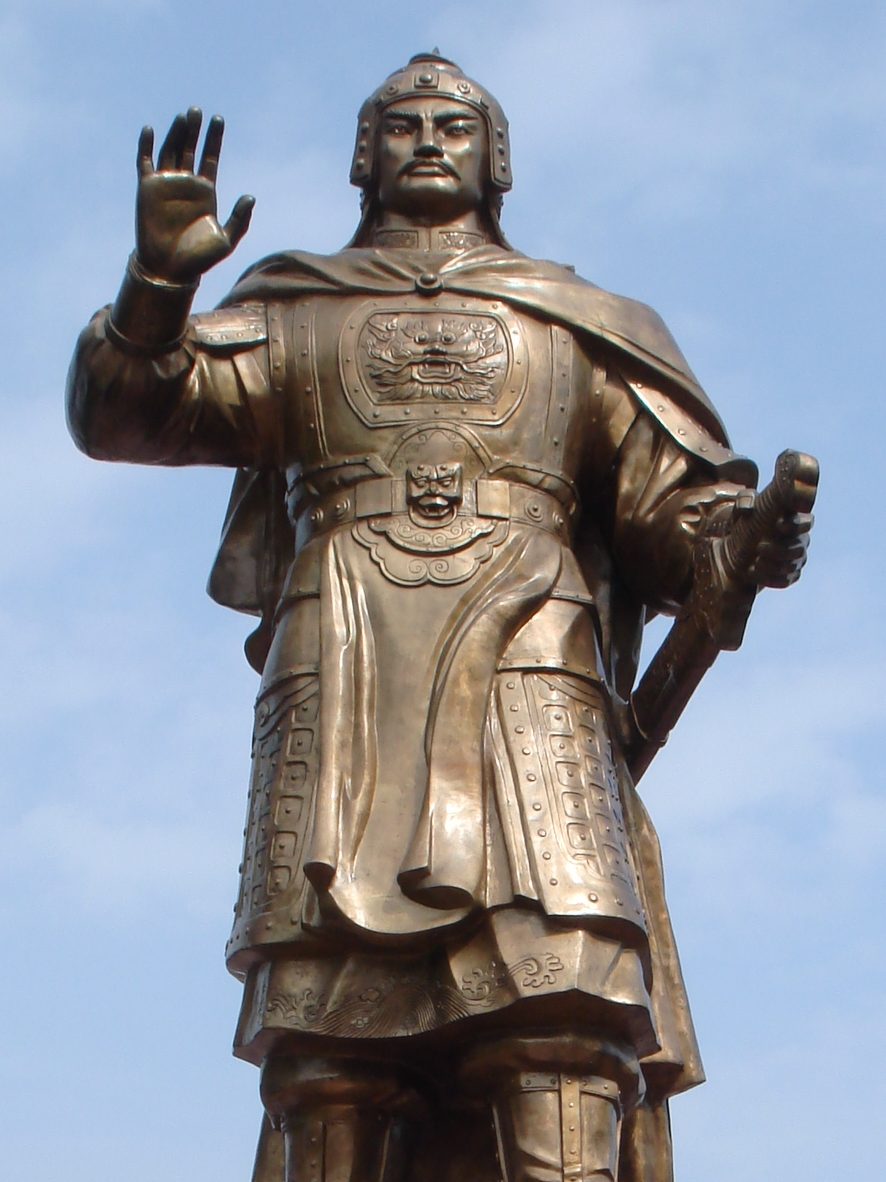
The Tây Sơn brothers, with popular support, overthrew the Trịnh and Nguyễn lords. Nguyễn Huệ (Quang Trung) led a successful defense against the Qing in 1789, securing Vietnam’s sovereignty (The History Files).
Vietnam’s Early Modern Era: Key Events (1789 – 1945)
Tây Sơn Dynasty (1789 – 1802)
The Tây Sơn Dynasty unified Vietnam and defeated the Qing. Emperor Quang Trung’s strategic diplomacy with China and Europe bolstered Vietnam’s position, but his untimely death in 1792 led to the dynasty’s quick decline (Dar, 2015; Manguin, 1984).
Nguyễn Dynasty (1802 – 1858)
Gia Long, supported by Europeans, established the Nguyễn Dynasty, renaming the country Việt Nam. His successors, Minh Mạng and Thiệu Trị, expanded territory and faced internal unrest and foreign tensions, particularly with France (The History Files).
French Colonialism (1858 – 1945)
France colonized Vietnam, exploiting resources and enforcing harsh rule. Despite brief resistance, Vietnam remained under French control, leading to nationalist uprisings (Rydström, 2014).

Japanese Occupation (1940 – 1945)
During WWII, Japan occupied Indochina. The Great Famine of 1945, caused by wartime disruptions, fueled resentment and weakened both French and Japanese control (Nguyen, 2023). Bảo Đại, the last Nguyễn emperor, abdicated in 1945.
Post-WWII and the Vietnam War Prelude (1945)
The end of WWII and the power vacuum led to the rise of competing factions.
The Việt Minh, led by Hồ Chí Minh, capitalized on famine relief efforts and anti-colonial sentiment, positioning themselves to take control.
At the same time, seeds of a non-communist South Vietnam emerge (Nguyen, 2023; Young, 2018).
Further Reading:
Books
Manguin, Pierre-Yves. Le Nguyen, Macau et le Portugal: Aspects politiques et commerciaux d’une relation privilégiée en Mer de Chine 1773-1802. Paris: École Française d’Extrême-Orient, 1984.
Tucker, Spencer C., ed. 500 Great Military Leaders. Santa Barbara, CA: ABC-CLIO, 2015.
Journal Articles
Borton, Lady. “Behind the Scenes, in the Forefront: Vietnamese Women in War and Peace.” ASIANetwork Exchange: A Journal for Asian Studies in the Liberal Arts 25:1 (2018): 7–59.
Dar, K. B. “Sino-Vietnamese Relations, 1771-1802: From Contention to Faithful Correlation.” Sejarah: Journal of the Department of History, University of Malaya 24.1 (2015): 94-106.
Dar, K. B. “The Tributary Relations Between China’s Song Dynasty and Vietnam’s Dinh, Le, and Ly Dynasties: Effects on Their Political Sustainability.” Sejarah: Journal of the Department of History, University of Malaya 28:1 (2019): 1-13.
O’Harrow, S. “Nguyen Trai’s Binh Ngo Dai Cao of 1428: The Development of a Vietnamese National Identity.” Journal of Southeast Asian Studies 10.2 (1979): 159-174.
Rydstrom, Helle. “Politics of Colonial Violence: Gendered Atrocities in French Occupied Vietnam.” European Journal of Women’s Studies (2014): 1–17.
Websites
“Far East Kingdoms – South East Asia.” The History Files. Accessed April 4, 2025. https://www.historyfiles.co.uk/KingListsFarEast/indexVietnam.htm
“History of Vietnam.” Britannica. Accessed April 4, 2025. https://www.britannica.com/topic/history-of-Vietnam#ref362712
Tan, Noel Hidalgo. “Archaeology of Vietnam.” Southeast Asian Archaeology, updated March 9, 2023. https://www.southeastasianarchaeology.com/vietnam-archaeology/
“Sports and Recreation – in Vietnam.” Britannica. Accessed April 4, 2025. https://www.britannica.com/place/Vietnam/Sports-and-recreation#ref509930
Online Articles
Nguyen, Christelle. “Remembering Vietnam’s Great Famine: The 1945 Famine Has Been Fading into Obscurity, Despite Its Crucial Role in the Country’s Independence Fight.” The Diplomat – Asia-Pacific Current Affairs Magazine, June 6, 2023. https://thediplomat.com/2023/06/remembering-vietnams-great-famine/
Young, Stephen B. “Who Were the Real Nationalists in Vietnam?” New York Times, March 9, 2018. https://www.nytimes.com/2018/03/09/opinion/who-were-the-real-nationalists-in-vietnam.html
 Freedom For Vietnam